

Hey there! I'm a supplier of Mobile Loading Dock Ramps, and today I want to talk about a super important topic: what is the turning radius required when using a mobile loading dock ramp?
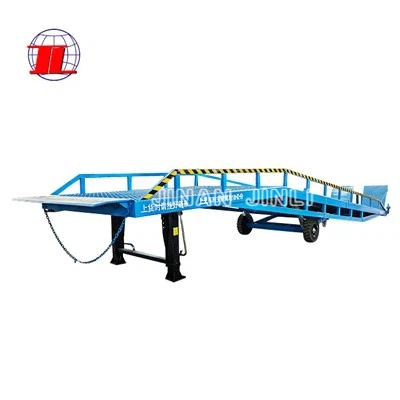
First off, let's understand what a mobile loading dock ramp is. A Mobile Loading Dock Ramps is an essential piece of equipment in many warehouses, distribution centers, and industrial sites. It provides a flexible and convenient way to bridge the gap between a truck and the loading dock, allowing for easy transfer of goods.
Now, the turning radius. The turning radius is the minimum space a vehicle needs to make a turn. When it comes to using a mobile loading dock ramp, getting the right turning radius is crucial. If you don't have enough space for the turning radius, it can lead to all sorts of problems. For example, trucks might not be able to position themselves correctly at the ramp, which can slow down the loading and unloading process. It could even cause damage to the ramp, the truck, or the goods being transported.
So, what factors affect the required turning radius when using a mobile loading dock ramp?
Vehicle Size and Type
The first and most obvious factor is the size and type of the vehicle that will be using the ramp. Different trucks, forklifts, and other industrial vehicles have different turning radii. For instance, a large semi - trailer truck will have a much larger turning radius compared to a small forklift.
A semi - trailer truck typically has a turning radius that can range from 20 to 50 feet, depending on the length of the trailer and the design of the truck. On the other hand, a standard forklift might have a turning radius of around 6 to 10 feet. As a supplier of Mobile Dock Ramp, we always recommend that our customers consider the largest vehicle that will be using the ramp when planning the space.
Ramp Design and Dimensions
The design and dimensions of the mobile loading dock ramp also play a role in determining the required turning radius. Some ramps are designed with wider platforms, which can give vehicles more room to maneuver. Additionally, the angle of the ramp can affect the turning. A steeper ramp might require a larger turning radius as the vehicle needs to approach it at a more careful angle.
For example, if you have a ramp with a narrow platform, a truck or forklift might need to make a wider turn to avoid hitting the edges of the ramp. It's important to choose a ramp design that is suitable for the vehicles that will be using it. We offer a variety of ramp designs at our company, and we can help you select the one that best fits your needs and the available space.
Loading and Unloading Operations
The way you conduct your loading and unloading operations can also impact the required turning radius. If you have a high - volume operation where trucks are constantly coming and going, you'll need more space for turning. This is because there will be more movement and less time for precise maneuvering.
In a busy warehouse, for example, trucks might need to make quick turns to get in and out of the loading area. In such cases, a larger turning radius is necessary to ensure safety and efficiency. On the other hand, if you have a low - volume operation with more time for careful maneuvering, you might be able to get away with a smaller turning radius.
Site Layout and Surroundings
The layout of the site where the mobile loading dock ramp will be installed is another important factor. If the ramp is located in a confined space, such as between two buildings or in a corner of a warehouse, it will limit the available space for turning.
You also need to consider any obstacles in the area, such as storage racks, columns, or other equipment. These obstacles can further reduce the effective turning radius and make it more challenging for vehicles to maneuver. Before installing a ramp, it's a good idea to conduct a site survey to identify any potential issues and determine the best location for the ramp.
Okay, so how do you calculate the required turning radius? Well, there's no one - size - fits - all formula. But here are some general steps you can follow:
- Identify the largest vehicle that will be using the ramp and find out its specified turning radius from the manufacturer's documentation.
- Consider the ramp design and how it might affect the turning. If the ramp has a narrow platform or a steep angle, you might need to add a few extra feet to the vehicle's turning radius.
- Evaluate your loading and unloading operations. If you have a high - volume operation, add some additional space for quick turns and maneuvering.
- Take into account the site layout and any obstacles. Measure the available space and subtract the space occupied by obstacles.
Let's say you have a large semi - trailer truck with a manufacturers - specified turning radius of 30 feet. You're using a ramp with a somewhat narrow platform, so you decide to add 5 feet to the turning radius. You also have a high - volume operation, so you add another 5 feet for quick maneuvering. Finally, after measuring the site and accounting for obstacles, you find that you need to make some adjustments. In the end, you might determine that you need a turning radius of around 40 feet.
As a supplier of Mobile Loading Dock Ramps, I understand that getting the right turning radius is just one part of the equation. You also need to consider the overall quality of the ramp, its durability, and its ease of use. We offer high - quality ramps that are designed to withstand heavy use and provide a safe and efficient way to load and unload goods.
If you're in the market for a mobile loading dock ramp, or if you have any questions about the turning radius or other aspects of ramp selection, don't hesitate to reach out. We're here to help you make the best decision for your business and ensure that your loading and unloading operations run smoothly. Whether you're a small business owner or part of a large corporation, we can provide the solutions you need.
So, take the time to carefully consider the turning radius and all the other factors involved. Make sure you have enough space and choose the right ramp for your vehicles and operations. And if you need any advice or assistance, just give us a shout. We're always happy to assist and help you get the most out of your mobile loading dock ramp.

Get in touch with us today to discuss your requirements and start the process of finding the perfect Mobile Loading Dock Ramps for your business. Let's work together to make your loading and unloading tasks more efficient and productive!
References
- Generic industrial vehicle and equipment manuals
- Industry best practices for loading dock design and operations


