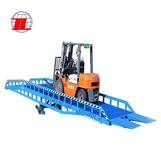
In the world of logistics and warehousing, loading dock equipment plays a crucial role in ensuring the smooth and efficient flow of goods. As a leading provider of loading dock equipment, we understand the significance of having the right tools for the job. In this blog post, we will explore the different types of loading dock equipment available, their features, and their applications.
Dock Levelers
Dock levelers are one of the most essential pieces of loading dock equipment. They bridge the gap between the dock and the trailer, allowing for the safe and efficient transfer of goods. There are several types of dock levelers available, each with its own advantages and disadvantages.
Mechanical Dock Levelers
Mechanical dock levelers are the most common type of dock leveler. They are operated manually using a chain hoist or a spring-assisted mechanism. Mechanical dock levelers are relatively inexpensive and easy to maintain, making them a popular choice for small to medium-sized businesses. However, they require more physical effort to operate and may not be suitable for heavy-duty applications.
Hydraulic Dock Levelers
Hydraulic dock levelers are powered by a hydraulic system, which allows for smooth and effortless operation. They are more expensive than mechanical dock levelers but offer several advantages, including faster operation, higher weight capacity, and better control. Hydraulic dock levelers are ideal for heavy-duty applications and high-volume loading docks.
Air-Powered Dock Levelers
Air-powered dock levelers use compressed air to operate. They are similar to hydraulic dock levelers in terms of performance but are typically more expensive. Air-powered dock levelers are known for their quiet operation and low maintenance requirements, making them a good choice for noise-sensitive environments.
If you are interested in learning more about dock levelers, you can visit our Dock Leveler Warehouse page for more information.
Dock Plates
Dock plates are another type of loading dock equipment that is used to bridge the gap between the dock and the trailer. Unlike dock levelers, dock plates are portable and can be easily moved from one location to another. They are typically made of steel or aluminum and come in a variety of sizes and weight capacities.


Fixed Dock Plates
Fixed dock plates are designed to be permanently installed at the loading dock. They are typically used in applications where the height difference between the dock and the trailer is relatively small. Fixed dock plates are available in a variety of sizes and weight capacities to meet the needs of different applications.
Adjustable Dock Plates
Adjustable dock plates are designed to accommodate a wider range of height differences between the dock and the trailer. They can be adjusted to different angles and heights, making them more versatile than fixed dock plates. Adjustable dock plates are available in a variety of sizes and weight capacities to meet the needs of different applications.
If you are interested in learning more about adjustable dock plates, you can visit our Adjustable Dock Plate page for more information.
Dock Shelters and Seals
Dock shelters and seals are used to create a weather-tight seal between the dock and the trailer. They help to prevent the entry of rain, snow, wind, and dust into the warehouse, which can damage the goods and increase energy costs. There are several types of dock shelters and seals available, each with its own advantages and disadvantages.
Foam Pad Dock Seals
Foam pad dock seals are the most common type of dock seal. They are made of a thick layer of foam that is covered with a durable fabric. Foam pad dock seals are relatively inexpensive and easy to install, making them a popular choice for small to medium-sized businesses. However, they may not provide a perfect seal and may need to be replaced more frequently than other types of dock seals.
Inflatable Dock Seals
Inflatable dock seals use compressed air to create a tight seal between the dock and the trailer. They are more expensive than foam pad dock seals but offer several advantages, including better sealing performance, longer lifespan, and lower maintenance requirements. Inflatable dock seals are ideal for applications where a high level of sealing performance is required, such as in cold storage facilities.
Dock Shelters
Dock shelters are designed to provide a more spacious and comfortable environment for loading and unloading goods. They are typically made of a fabric or vinyl material that is supported by a steel frame. Dock shelters are available in a variety of sizes and configurations to meet the needs of different applications. They can be installed either permanently or temporarily, depending on the requirements of the facility.
Vehicle Restraints
Vehicle restraints are used to secure the trailer to the dock during the loading and unloading process. They help to prevent the trailer from moving or separating from the dock, which can cause accidents and injuries. There are several types of vehicle restraints available, each with its own advantages and disadvantages.
Mechanical Vehicle Restraints
Mechanical vehicle restraints are the most common type of vehicle restraint. They are operated manually using a lever or a chain. Mechanical vehicle restraints are relatively inexpensive and easy to maintain, making them a popular choice for small to medium-sized businesses. However, they require more physical effort to operate and may not be suitable for heavy-duty applications.
Hydraulic Vehicle Restraints
Hydraulic vehicle restraints are powered by a hydraulic system, which allows for smooth and effortless operation. They are more expensive than mechanical vehicle restraints but offer several advantages, including faster operation, higher weight capacity, and better control. Hydraulic vehicle restraints are ideal for heavy-duty applications and high-volume loading docks.
Automatic Vehicle Restraints
Automatic vehicle restraints are designed to automatically engage and disengage when the trailer is backed up to the dock. They are typically operated using a sensor or a control system, which eliminates the need for manual operation. Automatic vehicle restraints are the most advanced type of vehicle restraint and offer the highest level of safety and convenience.
Other Loading Dock Equipment
In addition to the above types of loading dock equipment, there are several other types of equipment that are commonly used in loading docks. These include:
Dock Lights
Dock lights are used to provide illumination in the loading dock area. They help to improve visibility and safety during the loading and unloading process. Dock lights are available in a variety of types and sizes, including LED lights, fluorescent lights, and halogen lights.
Wheel Chocks
Wheel chocks are used to prevent the trailer from moving or rolling while it is parked at the loading dock. They are typically made of rubber or plastic and are placed in front of or behind the trailer wheels. Wheel chocks are an important safety device that should be used at all times when the trailer is parked at the loading dock.
Dock Bumpers
Dock bumpers are used to protect the dock and the trailer from damage during the loading and unloading process. They are typically made of rubber or plastic and are installed on the face of the dock. Dock bumpers help to absorb the impact of the trailer when it is backed up to the dock, which reduces the risk of damage to the dock and the trailer.
Mini Dock Levelers
Mini dock levelers are a type of dock leveler that is designed for use in smaller applications. They are typically used in warehouses or distribution centers where the volume of goods being loaded and unloaded is relatively low. Mini dock levelers are available in a variety of sizes and weight capacities to meet the needs of different applications.
If you are interested in learning more about mini dock levelers, you can visit our Mini Dock Leveler page for more information.
Conclusion
In conclusion, there are several types of loading dock equipment available, each with its own advantages and disadvantages. The type of equipment that you choose will depend on a variety of factors, including the size and volume of your business, the type of goods that you are handling, and the specific requirements of your loading dock. As a leading provider of loading dock equipment, we can help you to choose the right equipment for your needs. Our team of experts can provide you with detailed information about the different types of equipment available, as well as advice on installation, maintenance, and safety.
If you are interested in purchasing loading dock equipment, or if you have any questions or concerns, please do not hesitate to contact us. We would be happy to discuss your needs and provide you with a free quote. Investing in the right loading dock equipment can help to improve the efficiency, safety, and productivity of your business, so why wait? Contact us today and let us help you take your loading dock to the next level.
References
- "Loading Dock Equipment Buying Guide." Material Handling and Logistics, Mar. 2021, pp. 34 - 42.
- Smith, John. "The Importance of Proper Loading Dock Equipment." Warehouse Management Journal, Aug. 2020, pp. 12 - 18.
- Johnson, Emily. "Types of Dock Levelers and Their Applications." Industrial Equipment Review, May 2022, pp. 22 - 28.