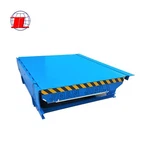
Whether a mobile lifting platform requires an operator's license depends on its specific type and purpose: self-propelled lifting platforms are usually not special equipment and do not require an operator's license; large lifting platforms mounted on vehicles or used for construction require a license to work.
Basis for judging whether an operator's license is required
Equipment type classification:
Self-propelled lifting platforms (such as articulated boom aerial work platforms): controlled by handles or buttons, not included in the special equipment catalog, and no special equipment operator's license is required.
Vehicle-mounted lifting platforms: As vehicle-attached equipment, special equipment operator's license is required.
Purpose and specifications:
Large lifting platforms for construction: If the height or load exceeds the standard, the operator must hold a special operation operator's license (high-altitude operation category).
Small household or low-height platforms (such as 3-10 meters): Usually no license is required, but safety training is required.
Regulations and safety requirements
Special equipment catalog: After the 2014 revision, it was clarified that self-propelled lifting platforms do not belong to lifting machinery and are excluded from special equipment supervision.
Height operation management: Even if an operator's license is not required, if there is a risk of falling (such as more than 2 meters), a height operation ticket or safety training is still required.
Operation license-related matters
Validity period and review: The validity period of the special operation operator's license is 6 years and it needs to be reviewed every 3 years.
Cross-regional operations: It is subject to supervision by the regulatory authorities in the place where the business is located.