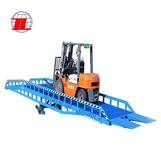
As a supplier of hydraulic levelers, I've witnessed firsthand the crucial role that relief valves play in these systems. In this blog post, I'll delve into the significance of relief valves in hydraulic levelers, exploring their functions, importance, and how they contribute to the overall performance and safety of the equipment.
Understanding Hydraulic Levelers
Before we discuss the role of relief valves, let's briefly understand what hydraulic levelers are. Hydraulic levelers are essential equipment in many industrial settings, particularly in Hydraulic Loading Dock and Dock Leveler Warehouse environments. They are used to bridge the gap between a loading dock and a truck or trailer, allowing for the smooth transfer of goods.
The operation of a hydraulic leveler is based on the principles of hydraulics. A hydraulic system uses a fluid, typically oil, to transmit power. When pressure is applied to the fluid in a confined space, it can generate a large force, which is used to lift and lower the leveler platform. This system offers several advantages, including smooth operation, high lifting capacity, and precise control.
The Function of Relief Valves in Hydraulic Levelers
Relief valves are a critical component of the hydraulic system in a leveler. Their primary function is to protect the system from over - pressure situations. In a hydraulic leveler, the pressure in the hydraulic system can increase due to various reasons, such as excessive load on the platform, a malfunction in the hydraulic pump, or a blockage in the hydraulic lines.


When the pressure in the hydraulic system exceeds a pre - set limit, the relief valve opens. This allows the excess hydraulic fluid to flow back into the reservoir, relieving the pressure in the system. By doing so, the relief valve prevents damage to the hydraulic components, such as the pump, cylinders, and hoses, which could otherwise be caused by high pressure.
For example, if a forklift with a very heavy load drives onto the leveler platform, the pressure in the hydraulic cylinders that support the platform will increase. If there were no relief valve, this increased pressure could cause the cylinders to burst or the hoses to rupture. The relief valve ensures that the pressure in the system remains within a safe range, even under heavy loads.
Safety and Protection
Safety is one of the most important aspects of any industrial equipment, and hydraulic levelers are no exception. Relief valves play a vital role in ensuring the safety of the operators and the integrity of the equipment.
In addition to protecting the hydraulic components from over - pressure, relief valves also prevent sudden and unexpected movements of the leveler platform. A sudden increase in pressure could cause the platform to jerk or move erratically, which could pose a serious risk to the operators and the goods being loaded or unloaded. The relief valve helps to maintain a stable pressure in the system, ensuring smooth and safe operation of the leveler.
Moreover, relief valves are designed to be reliable and fail - safe. They are built to withstand high pressures and are tested to ensure that they open at the correct pressure. This reliability is crucial in an industrial environment where the safety of workers and the efficiency of operations depend on the proper functioning of the equipment.
System Stability and Performance
Relief valves also contribute to the overall stability and performance of the hydraulic leveler. By maintaining a constant pressure in the system, they ensure that the leveler platform moves smoothly and evenly. This is important for the efficient transfer of goods, as a jerky or uneven platform can make it difficult for forklifts to drive on and off the platform safely.
In addition, the relief valve helps to maintain the accuracy of the leveler's operation. The pre - set pressure limit of the relief valve is carefully calibrated to match the design specifications of the hydraulic system. This ensures that the leveler can lift and lower the platform to the correct height and position, providing a stable and level surface for loading and unloading.
Maintenance and Calibration
To ensure the proper functioning of the relief valve in a hydraulic leveler, regular maintenance and calibration are required. Over time, the internal components of the relief valve can wear out, which may affect its performance. The valve may not open at the correct pressure or may leak hydraulic fluid.
During maintenance, the relief valve should be inspected for any signs of damage or wear. The valve should be cleaned to remove any dirt or debris that could affect its operation. In addition, the relief valve needs to be calibrated periodically to ensure that it opens at the correct pressure. This calibration is typically done using specialized equipment that can accurately measure the pressure at which the valve opens.
The Role of Relief Valves in Different Types of Hydraulic Levelers
There are different types of hydraulic levelers, such as Hydraulic Dock Plate and full - size loading dock levelers. The role of relief valves remains the same in all these types, but the specific requirements may vary.
In a hydraulic dock plate, which is a smaller and more portable type of leveler, the relief valve needs to be compact and lightweight while still providing effective over - pressure protection. The pressure settings of the relief valve are also adjusted according to the smaller lifting capacity and different operating conditions of the dock plate.
On the other hand, full - size loading dock levelers, which are used in large warehouses and distribution centers, have a higher lifting capacity and may be subject to more heavy - duty use. The relief valves in these levelers need to be able to handle higher pressures and larger volumes of hydraulic fluid. They are also designed to be more robust and durable to withstand the harsh industrial environment.
Conclusion
In conclusion, relief valves are an indispensable component of hydraulic levelers. They play a crucial role in protecting the hydraulic system from over - pressure, ensuring the safety of the operators and the equipment, and maintaining the stability and performance of the leveler.
As a supplier of hydraulic levelers, we understand the importance of using high - quality relief valves in our products. We ensure that all our levelers are equipped with reliable relief valves that are properly calibrated and maintained.
If you are in the market for a hydraulic leveler, whether it's a Hydraulic Loading Dock, a Hydraulic Dock Plate, or a Dock Leveler Warehouse solution, we are here to provide you with the best products and services. Our team of experts can help you choose the right leveler for your specific needs and ensure that it is installed and maintained correctly. Contact us to start a discussion about your procurement requirements and let us help you find the perfect hydraulic leveler solution for your business.
References
- "Hydraulic Systems and Components" - Industrial Hydraulics Handbook
- "Safety Standards for Loading Dock Equipment" - Occupational Safety and Health Administration (OSHA)
- "Design and Operation of Hydraulic Levelers" - Journal of Industrial Equipment Engineering